“Great acting headshots in St. Louis aren’t one photo. They’re four looks: commercial, theatrical, edgy and legit. Each one is built for a different type of role, and sending the wrong one can cost you the audition.”
Your headshot is your audition before the audition. Before a casting director hears you read a single line, they’ve already looked at your photo, usually as a small thumbnail among hundreds of others. In those few seconds they’re asking one question: can this person play this role?
That’s why one “nice photo” isn’t enough. A smiling, friendly image that books a pizza commercial will be passed over for a crime drama. A brooding, intense image that’s perfect for a villain won’t land you the best friend in a sitcom. Working actors solve this by building a portfolio of distinct looks, and submitting the one that matches each role.
Below are the four essential types of acting headshots, what casting directors read into each one, and exactly what you need (expression, wardrobe, backdrop and lighting) to get them right.
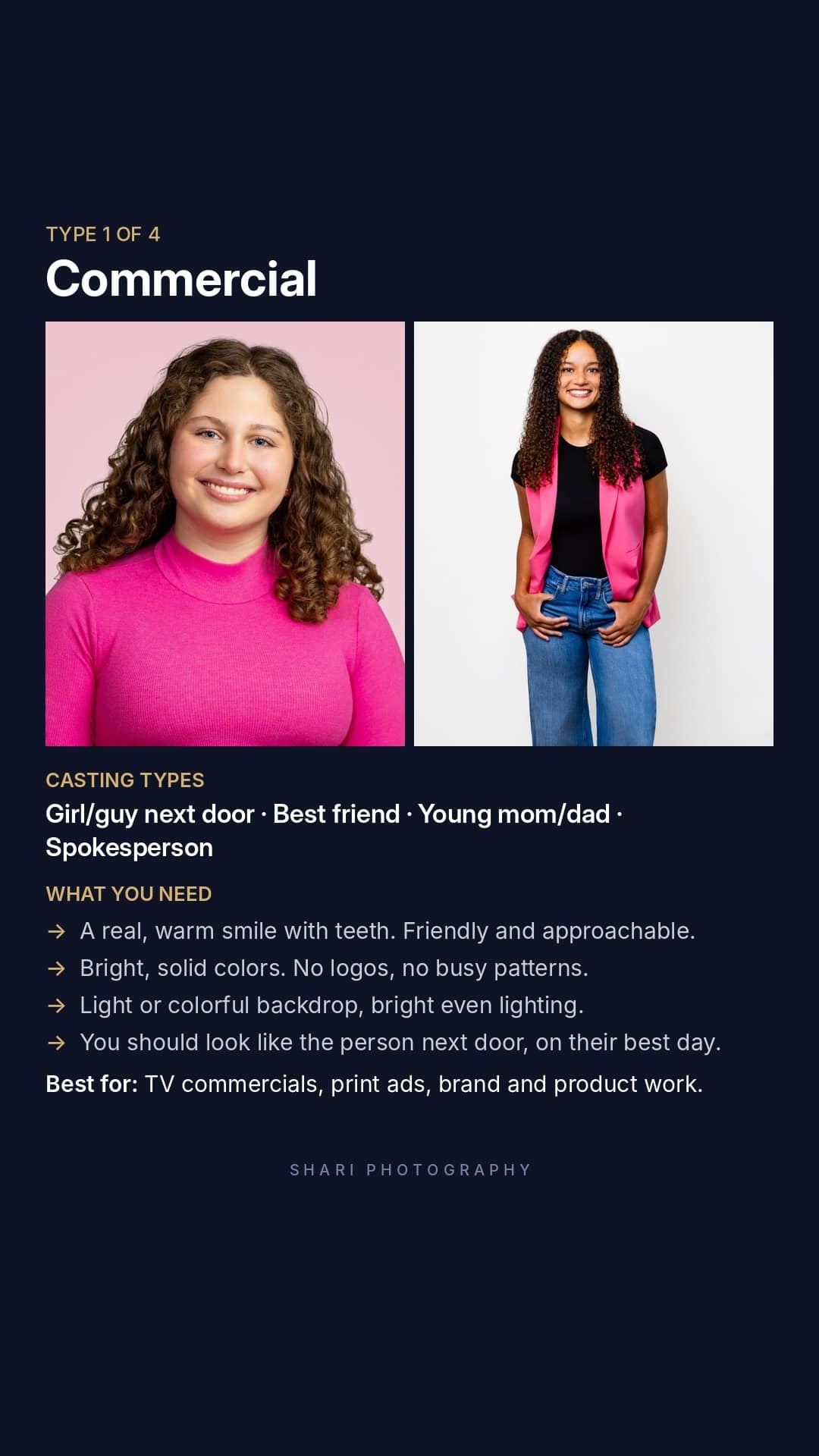
1. Commercial Headshots
Casting types: the girl or guy next door, the best friend, the young mom or dad, the friendly coworker, the spokesperson.
Commercial headshots sell trust. Advertisers want someone viewers instantly like and believe, the kind of person who could recommend a product and sound genuine doing it. Your commercial headshot should say “approachable, likeable and easy to work with.”
Expression: a real, relaxed smile with teeth that reaches the eyes. Forced “camera smiles” read as fake immediately, so a good photographer will keep you talking and laughing until the natural smile shows up.
Wardrobe: bright, solid colors that flatter your skin tone: blues, pinks, greens, jewel tones. Avoid logos, busy patterns, stripes and anything that pulls attention away from your face.
Backdrop and lighting: light, clean or colorful backdrops with bright, even light and soft shadows. The overall feel should be upbeat and fresh.
2. Theatrical Headshots for Film and TV
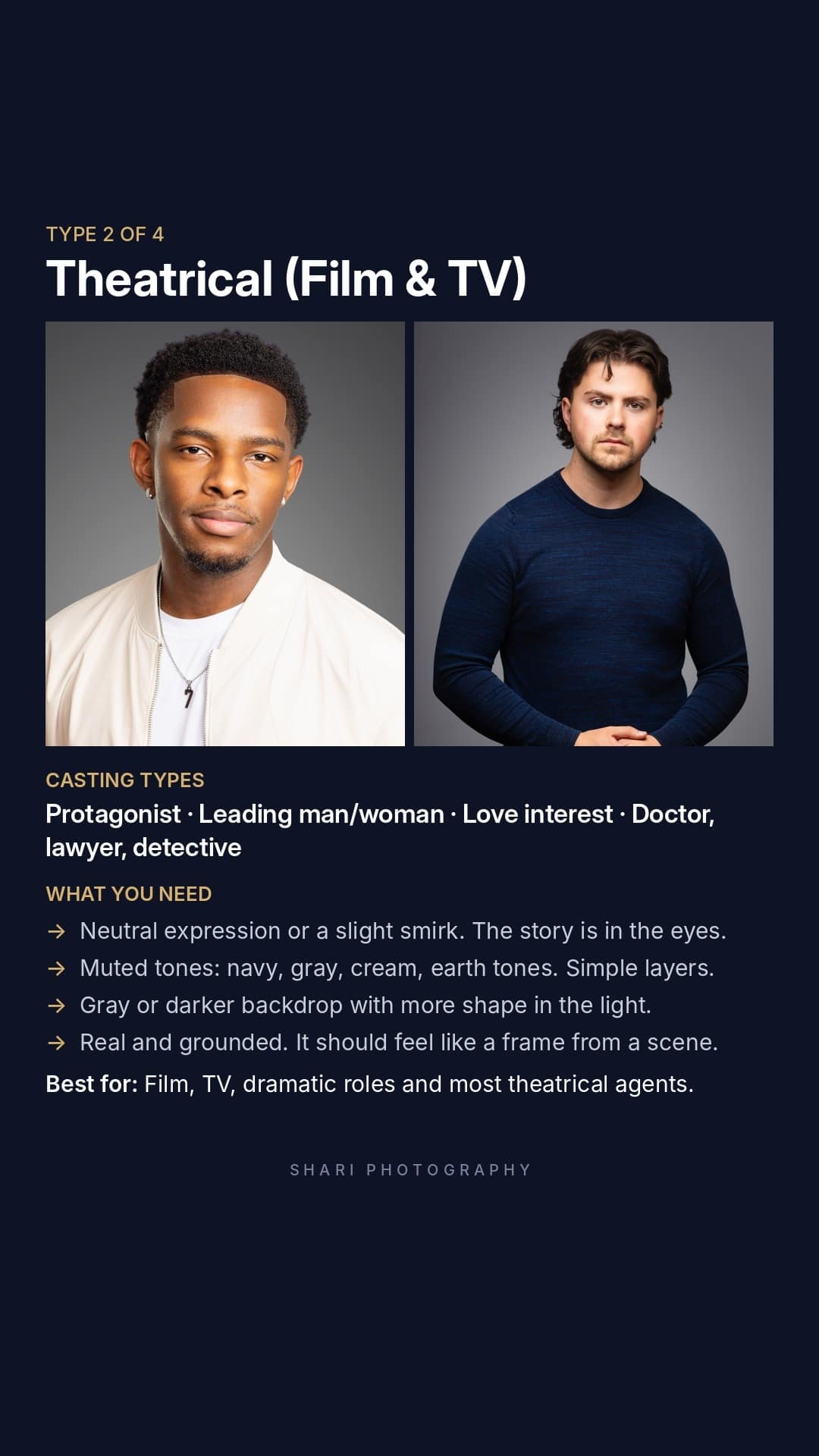
Casting types: the protagonist, the leading man or woman, the love interest, the doctor, lawyer or detective.
Theatrical headshots are what most agents and film and TV casting directors expect to see first. They show depth and inner life. The image should feel like a still frame from a scene, as if something is happening behind your eyes.
Expression: neutral, thoughtful or a subtle smirk, usually with the mouth closed. The intensity comes from the eyes, not a big expression. Think “listening,” “considering” or “about to speak.”
Wardrobe: muted, grounded tones like navy, charcoal, gray, cream and earth colors. Simple layers such as a jacket over a tee, or a fitted knit sweater, add dimension without distraction.
Backdrop and lighting: gray or darker backdrops with more shape in the light, so one side of the face falls slightly into shadow. That contrast adds mood and dimension.
3. Edgy and Character Headshots
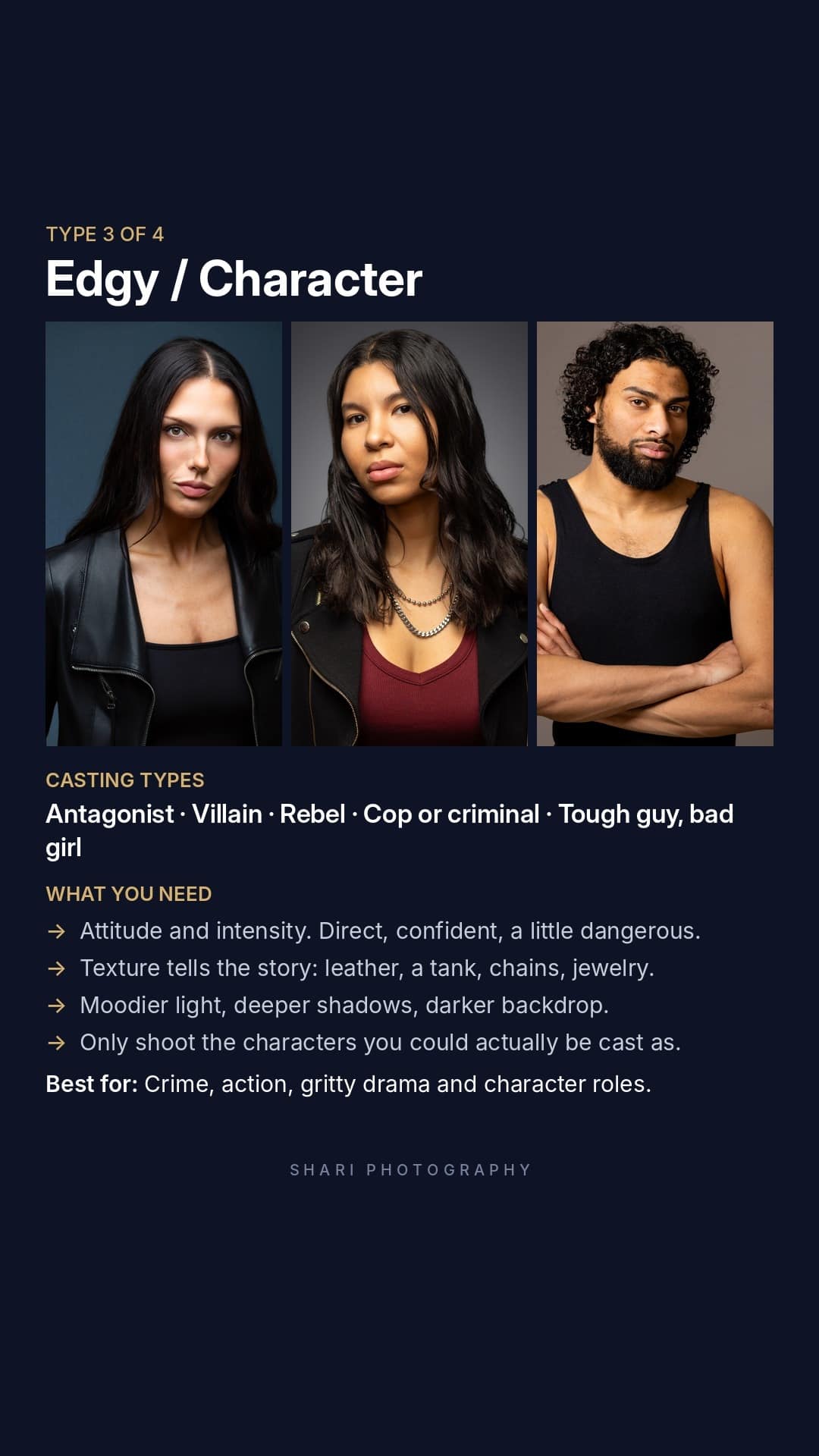
Casting types: the antagonist, the villain, the rebel, the cop or criminal, the tough guy or bad girl.
Edgy headshots show casting that you can bring tension, danger or grit to a scene. They’re essential for crime dramas, action, thrillers and gritty independent film, and they’re where many actors find their most memorable roles.
Expression: direct, confident and controlled. A steady gaze straight into the lens, a set jaw, a hint of attitude. You want the viewer to feel slightly challenged.
Wardrobe: texture tells the story. Leather jackets, tank tops, denim, chains and layered jewelry all help. Keep it authentic to you rather than costume-like.
Backdrop and lighting: moodier, darker backdrops, harder light and deeper shadows. Body language matters here too, so crossed arms or a wider crop can carry the attitude.
One rule: only shoot the characters you could realistically be cast as. An edgy headshot that doesn’t match your natural type looks like dress-up, and casting sees through it.
4. Legit and Stage Headshots
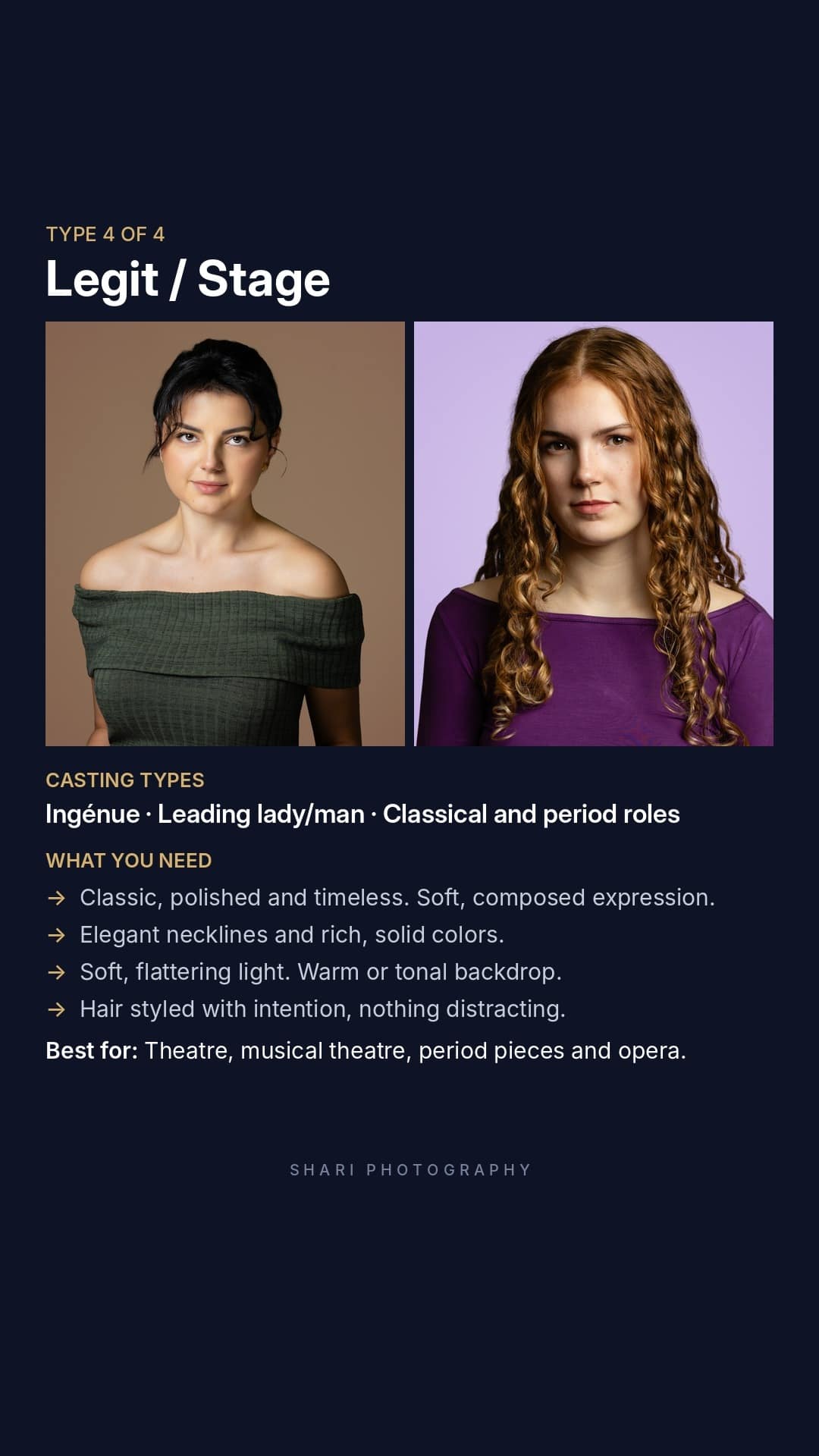
Casting types: the ingénue, the leading lady or man, classical and period roles.
“Legit” is the theatre world’s term for the classic, polished look expected for stage work, musical theatre and period productions. These headshots feel timeless and refined, as if they could have been taken any time in the last few decades.
Expression: soft, composed and poised. A gentle closed-mouth smile or calm, open expression works best.
Wardrobe: elegant necklines (off-the-shoulder, boat neck, scoop), rich solid colors and simple jewelry. Hair should be styled with intention, whether that’s soft curls, a polished updo or a sleek finish.
Backdrop and lighting: soft, flattering light with warm or tonal backdrops that complement the wardrobe.
Same Actor, Two Castings
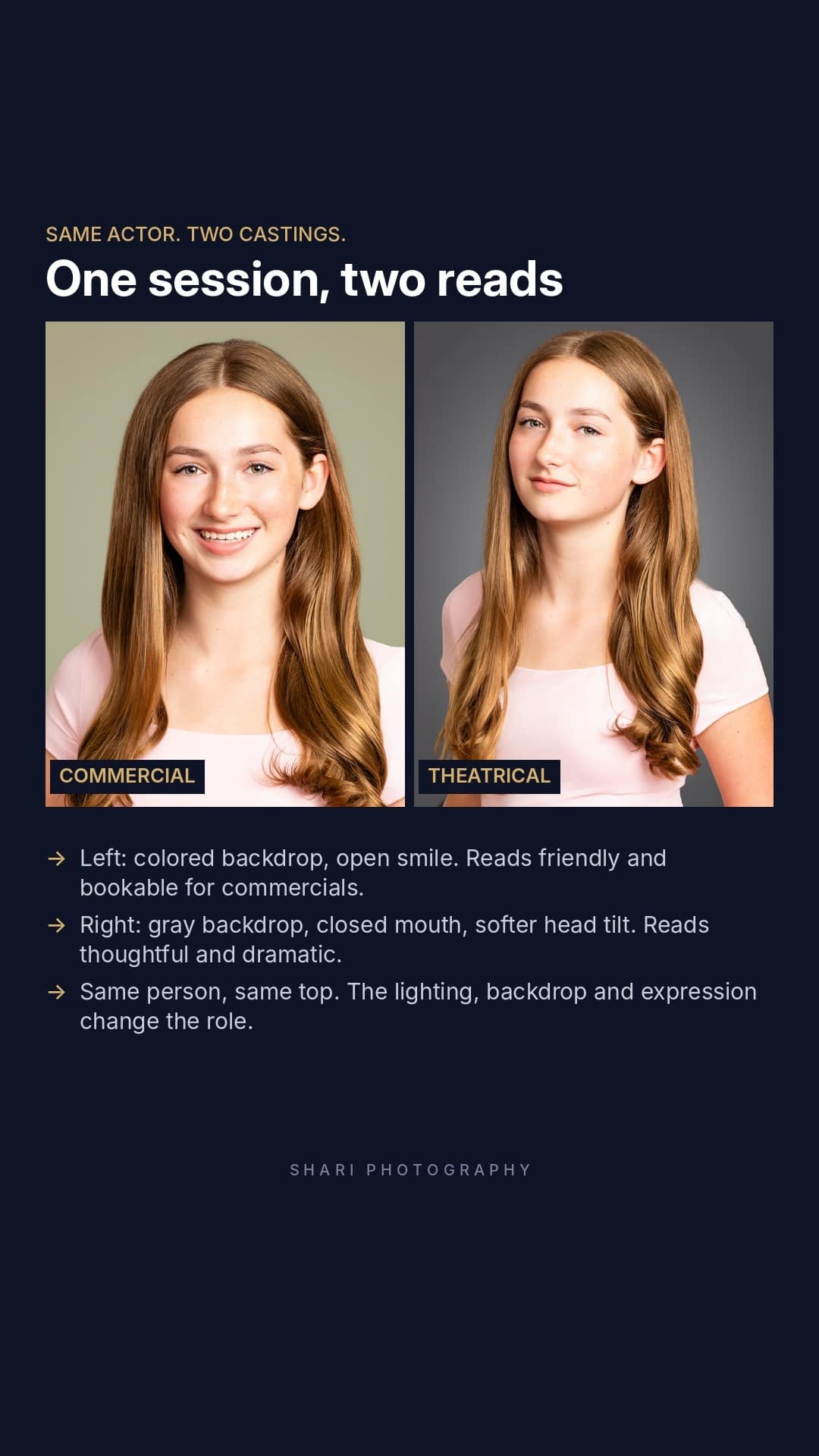
Here’s the best proof that the details matter: the same actor, in the same top, photographed two ways. On the left, a colored backdrop and an open smile make her bright and bookable for commercials. On the right, a gray backdrop, closed mouth and softer head tilt make her thoughtful and dramatic, a theatrical read.
Nothing about the actor changed. The lighting, backdrop and direction changed the role she’s right for. That’s why the photographer behind the camera matters so much.
How to Prepare for Your Acting Headshot Session
- Know your type. Think about the roles you’re realistically cast in, and plan your looks around them.
- Bring options. Pack 4 to 6 tops in solid colors and different necklines so each look can be styled properly.
- Keep it natural. Your headshot must look like you when you walk into the room. Avoid dramatic makeup changes or heavy retouching that alters your features.
- Rest and hydrate. Tired eyes show on camera. A good night’s sleep is the best retouching there is.
- Update regularly. Refresh your headshots whenever your look changes, such as a new haircut, color or weight change, and generally every one to two years.
Choose an Experienced Acting Headshot Photographer
A warning: an acting headshot is not a business headshot or a portrait. If your photographer doesn’t know these looks, don’t book them. Work only with an experienced portrait photographer who specializes in acting headshots. If they don’t get the look right, you won’t get the role.
A strong acting headshot photographer knows how to light each look differently, direct expressions that read on camera, guide wardrobe choices and help you understand which image to submit for which role. Many photographers can take a pleasant picture. Far fewer know what casting directors are actually looking for.
With more than 20 years photographing St. Louis actors and professionals, Shari Photography directs every look, expression and wardrobe change for you, so you leave with a portfolio built to get you in the room.

